Natural capital, green finance, and the future of productivity: Bennett professor delivers keynote in Beijing
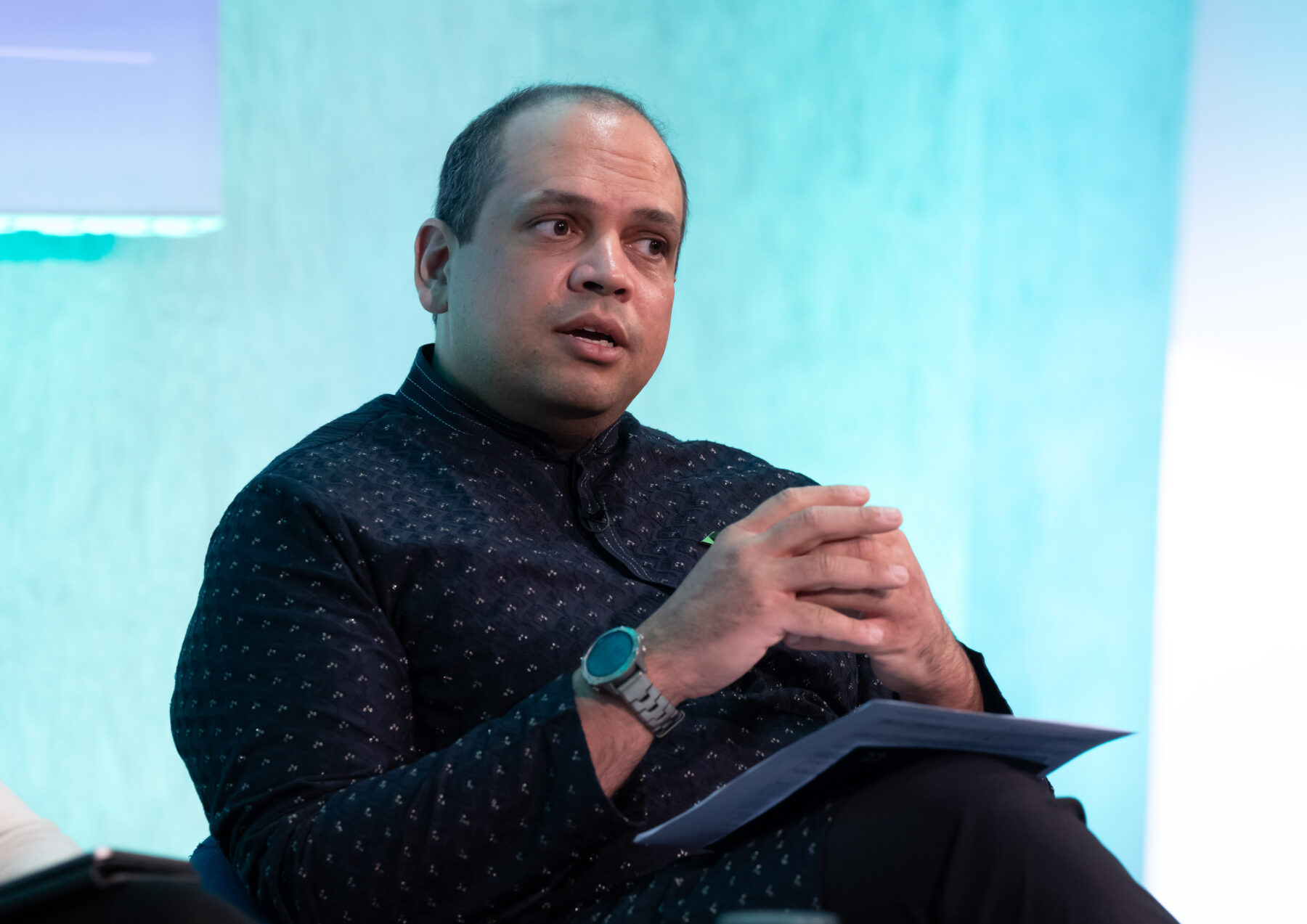
Matthew Agarwala speaks at the 3rd International Conference on Realizing the Value of Ecosystem Goods and Services.
Professor of Sustainable Finance, Matthew Agarwala, is this week in Yanqing, Beijing, delivering a keynote address at the 3rd International Conference on Realizing the Value of Ecosystem Goods and Services. Hosted by the prestigious Chinese Academy of Sciences, this conference brings together leading global thinkers in ecological economics, sustainability, policy and finance to tackle one of the most pressing questions of our time: how can we recognise the true value of nature in economic decision-making?
Matthew’s keynote, titled “What we can learn from natural capital: productivity & green finance”, explores how cutting-edge research and robust data can reshape the way we understand two cornerstones of economic prosperity: productivity growth and sovereign debt markets.
At the heart of his talk are two case studies. They illustrate how natural capital science and natural capital accounting allow economists, policymakers, and investors to see beyond GDP and account for the vital contributions of ecosystems, biodiversity, and natural resources.
The first case study focuses on environmentally-adjusted productivity. Traditional productivity metrics ignore the role of natural assets such as clean air, water, and fertile soils. But as climate risks rise and environmental degradation mounts, this oversight becomes costly. By integrating environmental data into productivity statistics, the research reveals a more complete picture of economic performance – one that demonstrates how incorporating nature into productivity analysis can radically improve measured productivity growth. More about this work with Josh Martin is available here.
The second case study turns to the world of sovereign debt, where Matthew’s research team (with Bennett Institute Visiting Professor Pati Klusak) is breaking new ground, receiving the 2025 Financial Times Award for Research Impact. With public debt reaching $100tn globally, investors need tools to assess long-term risk, inclusive of climate and nature-related risk. The team shows that environmental degradation will increasingly affect a country’s ability to repay debt. By incorporating natural capital into sovereign credit assessments, financial markets can better identify, price, and manage risk.
These insights are not just academic – they’re actionable. From finance ministries and central banks to institutional investors and development banks, the momentum for embedding natural capital into mainstream economics is growing.
Matthew’s message is clear: measures of economic progress must reflect impacts and dependencies on nature.
The Bennett Institute is proud to support this kind of trailblazing research that pushes boundaries, influences policy, and delivers practical tools for a sustainable future.