A week exploring Responsible AI at the University of Lund
“AI helps you think.”
“AI stops you thinking.”
“AI makes research more efficient.”
“Research isn’t just about efficiency.”
“AI speeds up literature reviews.”
“AI literature reviews are unreliable.”
“Researchers should develop AI skills.”
“Researchers should resist AI.”
Despite my PhD’s focus on AI governance, I find it confusing how to best use AI in my own research. I bounce between opinions like those quoted above. Given the explosion in digital data, partly accelerated by AI itself, it feels like in some disciplines, research methods supported by AI might soon become necessary to make sense of the rapidly growing quantity of information online. And there are no doubt incredibly useful applications of AI in research. However, I am also sceptical about the promises associated with AI tools for research. Without the appropriate safe guards, their use appears to threaten research integrity and reproducibility, they risk creating cognitive debt if over-relied upon, and there are many privacy and IP risks. These also sit alongside broader concerns about data theft, labour and environmental exploitation, and power concentration associated with many AI systems. To me, the struggle to navigate responsible AI use within academia mirrors the experiences and tensions elsewhere in society.
As I’ve struggled to make sense of what responsible AI means, both in my own research practices and more broadly in terms of AI innovation, I was delighted to be offered a place to explore these themes across a week at the University of Lund for the EU-SPRI Autumn School on Responsible AI for Science, Technology, Innovation, and Policy. Along with 20 other researchers, we spent a week learning about AI as a research tool, AI an object of enquiry, and AI as a socio-technical system.
One of the key strands across the week was exploring AI as a research tool. This was the topic I was most excited to learn more about, and while I certainly haven’t become an expert, it opened my eyes to what’s possible with AI tools and introduced some useful practices. The first thing we learnt was simple advice on prompting. The formula for effective prompting relies on four key elements: context, specificity, task, and format. To actually align an LLM with your task and context requires that you tell the AI your research domain, discipline, and background; tell the AI who you are and what you are working on; narrow the scope by defining time range, variables, methodology, and data type; state exactly what you need the AI to do: use action verbs like extract or summarise; and lastly, guide the AI on how to present the results by specifying the desired output structure: bullet points, tables, paragraphs, as well as length and level of detail. It turns out that AI, much like the rest of us, performs better when it actually knows what it’s supposed to be doing.
As well as learning how to get better responses from AI, we also explored how to use it for tasks like document analysis, which could be incredibly useful for policy research. GitHub is full of open-source tools for extracting information from documents. We explored Docling, but there appears to be a whole trove of solutions out there for parsing text from different document formats, which could be used for scaling up data extraction and cleaning. Alongside this, we began to explore the design of evidence extraction pipelines using a variety of tools like Google Colab, agent harnesses, and open-source models. One particularly interesting lesson was the importance of designing these pipelines around the limitations of LLMs, particularly context fatigue, where models become less reliable when processing large amounts of information. We explored approaches like map-reduce, which involves breaking documents into smaller chunks, extracting information from each separately, and then bringing the results back together. Of course, as I found out in the exercise on OECD policy documents, the usefulness of this approach depends on having a clear analytical framework for identifying what evidence matters, but for policy research, where there may be hundreds of lengthy documents to work through, it seems like a valuable way of reducing the dimensionality of data. The possibility of using local LLMs is also promising for protecting data privacy, as well as a potential avenue to reduce dependency on big tech, improve reproducibility, and reduce costs.
We were also lucky enough to attend many sessions exploring other aspects of responsible AI, though one of these was a rather alarming crash course on the safety risks posed by increasingly capable agentic systems, which also rather unfortunately coincided with reading Wes Streeting’s update on stockpiling adding to my alarm. In the session, we explored some of the risk scenarios associated with the trend towards increasingly capable, agentic AI systems that can plan and execute tasks. In particular, AI systems trained on vast amounts of online information might develop the capability to recognise when they are being evaluated and conceal potentially harmful behaviours. The hope is that it doesn’t take a catastrophic scenario to serve as a wake-up call for proper intervention, but continueing trends are concerning.
In the context of concerns like these, I find that exploring the wider sociotechnical context of AI is particularly useful. A session that was particularly useful in this regard explored the dark side of AI innovation, which referred to the notion that some harms are sturcutrally embedded in how AI creates value, including the exploitation of other countries’ resources, data, and labour. One phrase that I was particularly struck by during a session run by a Minister from the Nordic Council was “infrastructure of trust”, which was brought up in the context of what allows successful collaboration among the Nordic countries. In this view, trust is a strategic asset that must be built and maintained through institutions, fairness, cooperation and accountability, and one that has real economic value. This phrase seems very useful for understanding how the speed of AI development, its opacity and its potential to disrupt institutions threatens the functioning of our societies and their economic health. It shifts the focus to what governance arrangements, institutional capabilities and accountability mechanisms are needed to justify trust in AI systems rather than just benchmarks and evaluations.
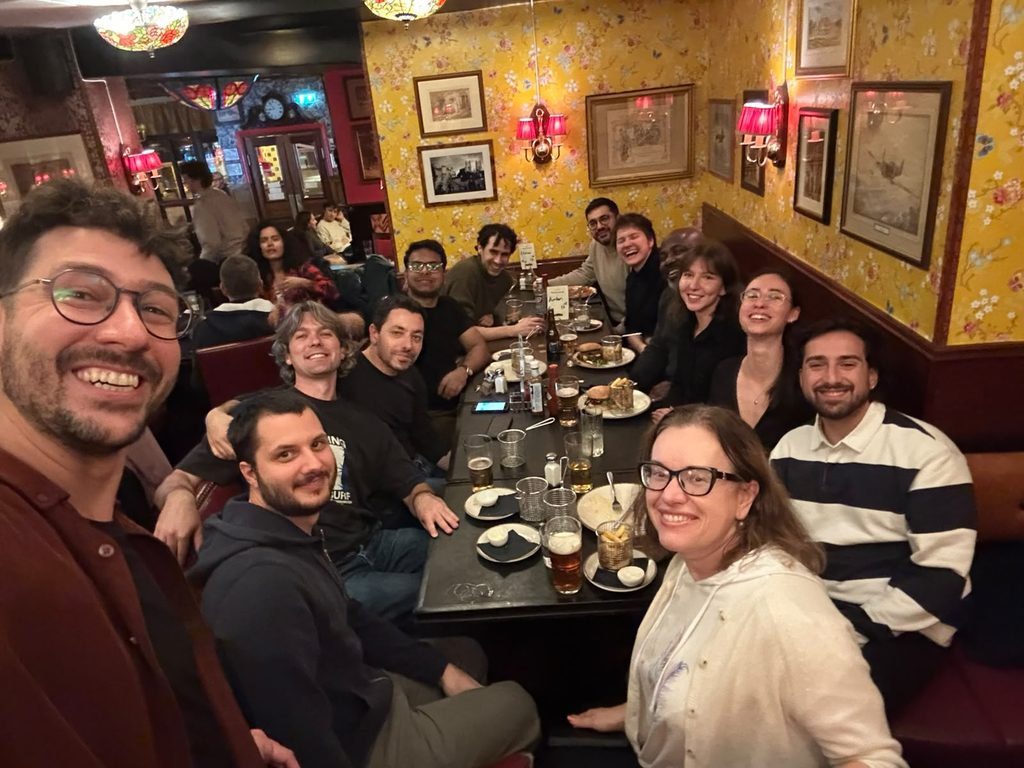
Many of the themes we discussed over the week reminded me of the Collingridge dilemma, which describes a catch-22 between the predictability of a technology’s impacts and the ease of changing or regulating it, and I kept returning to responsible innovation frameworks. A better path forward still feels possible, especially in Europe, but there are important questions about who is currently steering innovation, and towards what ends? Many of the challenges we face seem tied to the concentration of power among a handful of large AI firms, big tech, and venture capital interests, whose commercial incentives don’t appear to align with wider societal interests. In this context, learning about different AI research methods and tools felt empowering, particularly the possibility of reducing my dependence on these firms in my own research (I might even work towards switching to Linux). While the wider challenges are complex, it was refreshing to spend a week reflecting on the responsible AI. And sharing some drinks and food with researchers across the world wasn’t too bad either!