
AI’s Energy Tipping Point: New Research Supported by Bennett Institute Charts a Path to Sustainable Digitalisation
Artificial intelligence is accelerating as one of the fastest innovations in modern history, and so is the energy needed to power it. Behind every chatbot query, image generator, and autonomous system lies a rapidly expanding global infrastructure of data centres, cloud platforms and computational hardware whose electricity use is rising steeply.
The world stands at a critical moment. AI’s potential to accelerate climate solutions is immense, from smart grids to predictive maintenance and renewable forecasting. But without systemic interventions, its rising energy appetite could sharpen global inequalities, strain local resources, and compromise climate targets. A major new peer reviewed study, supported by all the Bennett Institute’s Benjamin Sovacool, Matthew Agarwala and Felix Creutzig, reveals both the scale of this challenge and the urgent opportunity to reshape the future of digitalisation along more sustainable lines.
This landmark study highlights a simple truth:
Sustainable digitalisation is possible — but only if technological innovation is matched by institutional reform, coordinated policy, and cultural change.
Published in Renewable and Sustainable Energy Reviews, the research provides the most comprehensive overview to date of the energy and environmental impacts of AI and data centres and proposes a roadmap for action grounded in sociotechnical systems thinking.
Shaping the Future of Sustainable Digitalisation, Summary of Key Insights;
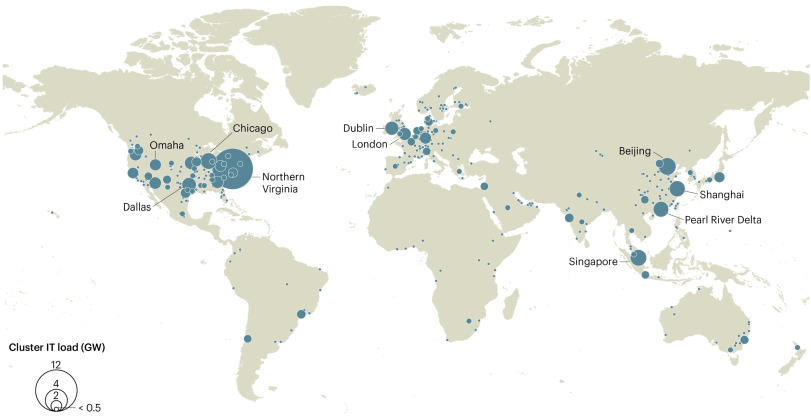
A Global System Under Strain
AI’s carbon and electricity footprint is rising at an unprecedented rate. The study synthesises evidence that:
- Global data centre electricity demand could grow 13–15% every year to 2030.
- Electricity use from AI and data centres may exceed 1,000 TWh by 2026, roughly matching the total annual electricity consumption of Japan.
- A single generative AI query uses around ten times more energy than a traditional internet search.
As more sectors adopt largescale AI, from healthcare and finance to public services, the demand for compute is outpacing historical gains in efficiency. That raises a fundamental question for governments and industry: Can digitalisation remain compatible with global climate goals?
A New Framework for Sustainable Digitalisation
To answer this, the authors apply a sociotechnical systems (STS) lens, examining the digital ecosystem across four interconnected domains:
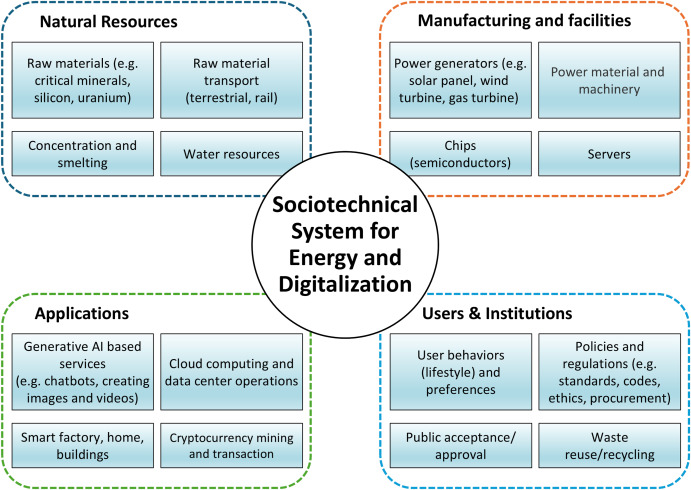
This whole-systems framing reflects the Bennett Institute’s commitment to understanding technological change not only as an engineering challenge, but as a social, political and organisational one. It allows policymakers to see the full chain of impacts – from minerals and water use, to hardware, software, and regulatory structures – and to identify leverage points for meaningful action.
Seventy Innovations for a Low Carbon Digital Future
The review identifies more than 70 low and zero-carbon innovations capable of reducing the energy footprint of AI and data centres, with some offering 13 – 94% reductions in individual studies. These innovations span all levels of the digital stack. Together, these represent a powerful portfolio of options that governments and organisations can deploy today – if the right regulatory and investment environments are in place.
Barriers That Must Be Overcome
Despite the array of promising technologies, the study highlights several barriers slowing progress:
- Technological constraints, including inefficient chip design, limited cooling capacity, and water scarcity in data centre regions
- Institutional and political fragmentation, with inconsistent global standards and slow permitting processes
- Economic and market barriers, such as volatile energy prices and high capital costs for retrofits
- Behavioural challenges, including organisational inertia and lack of incentives for sustainable practice
A Policy Roadmap for Sustainable AI
The paper provides a structured set of policy tools that can be deployed immediately, including:
- Carbon pricing and emissions trading adapted to digital infrastructure
- Mandatory energy reporting for AI workloads and data centres
- Minimum energy and carbon performance standards
- Green public procurement programmes
- Incentives for renewable powered digital infrastructure and crypto mining alternatives
- Voluntary industry compacts and codes of conduct
A Call for Global Research and Collaboration
The publication concludes with a nine-point research agenda calling for coordinated international action on:
- Future energy demand forecasting
- Global equity in data centre distribution, particularly in the Global South
- Community and environmental impacts of siting decisions
- Energy justice and affordability
- Cryptocurrency sustainability transitions
- Cross sector grid interactions
- Organisational and behavioural change in AI intensive institutions
These questions speak to the heart of the Institute’s work, bridging disciplines, bringing together industry and government, and ensuring that transformations in digital technology support, rather than undermine, societal wellbeing and global sustainability.
The barriers highlighted in this paper echo many themes that the Bennett Institute has long examined, from the political economy of infrastructure to the human dimensions of technological transformation. With the policy toolkit aligning directly with the Bennett Institute’s mission to accelerate evidence-based policymaking, shaping an ecosystem where innovation and sustainability can coexist.
The Bennett Institute remains committed to advancing this agenda, working with partners across academia, government, and industry to shape a digital future that is both innovative and environmentally resilient.