PhD Spotlight: Advancing Policy Through Climate, Health and Technology Research
Over the past few months, our PhD community has been advancing research that speaks directly to some of today’s most pressing policy challenges; from climate vulnerability and public health, to the governance of emerging technologies. Our current doctoral research students have been making progress on ambitious research agendas whilst also engaging with policymakers, practitioners and the wider research community.
Understanding Climate Stress in Development Systems

Indrajit Adhikari’s doctoral research sits at the intersection of climate variability and development, with a particular focus on microfinance and health systems in large emerging economies. Over the past year, he has been developing a set of three closely linked papers that examine how climate-related stress is absorbed, and unevenly distributed, within development institutions.
The first paper provides global evidence that temperature anomalies are associated with reduced microfinance outreach, with particularly strong effects for women borrowers. This finding highlights how climate stress can reinforce existing gender inequalities in access to finance. A second paper, based on a systematic review of 42 studies, takes a broader view, showing that while microfinance can enhance short-term resilience to climate shocks, its longer-term effectiveness is often constrained by structural and institutional limitations.
Building on these insights, a third paper examines how climate-induced economic pressures surface within national health systems in major emerging economies. Taken together, Indrajit’s work sheds new light on how climate stress shapes financial access, system resilience and the distribution of risk across development contexts. Raising important questions for policymakers seeking to design equitable and robust climate adaptation strategies.
Putting Health at the Centre of Climate Policy

Devin O’Donnell’s research focuses on advancing people-centred climate policy through a public health lens, with a particular emphasis on cities. In January, she published her first paper, which finds that many cities currently lack health-focused adaptation strategies within their climate action plans – a gap that has significant implications for how climate risks are managed on the ground.
She has been actively sharing this work with both academic and policy audiences. Over the past few months, Devin presented her findings at the 5th National Climate Impacts and Risk Meeting in Bristol and the 2nd ENBEL Connecting Climate and Health Conference in Estonia. She also led a workshop at the Planetary Health Annual Meeting in the Netherlands, exploring how art can be used to communicate planetary health challenges more effectively.
Central to Devin’s PhD is her collaboration with the C40 Centre, where she is a scholar in residence. The C40 Centre sits within C40 Cities, a global network of 98 cities working to advance municipal climate policy. Through this partnership, Devin has been presenting her research to C40 colleagues and working closely with city teams to better integrate health into climate decision-making. One key output from this collaboration is an upcoming guide for cities on integrating health into climate action planning, developed with C40 and the Pathfinder Initiative at the London School of Hygiene and Tropical Medicine and due for release later this year.
Alongside this policy-facing work, Devin attended the ACCESS Summer School in September 2025, learning about collaborative research approaches in the sustainable social sciences, and is now developing her second and third papers. These projects draw on interviews with city governments to understand how cities are overcoming governance and implementation challenges in climate and health action. Early findings from her second paper were presented in a lightning talk at the 2nd Bennett Institute Symposium in February.
Governing Expectations Around Artificial Intelligence

While climate policy features strongly across the cohort, Dominic Watter’s research turns to another defining challenge of contemporary policymaking: artificial intelligence. Alongside completing the compulsory master’s modules in the first year of his PhD, Dominic has been developing his first paper, which applies the sociology of expectations to artificial general intelligence (AGI). The paper explores how claims about AGI are constructed, legitimised and made to appear credible in US public discourse, and what this means for governance and policy.
In parallel, Dominic has contributed to a research note examining how existing governance frameworks struggle to account for how AI technologies are actually developed and deployed across civilian and military contexts. This work speaks directly to current debates on AI regulation and the risks of rapidly evolving technological systems.
Beyond his research, Dominic has also been contributing to the Institute’s wider research community. He has helped organise the upcoming SPRU PhD Forum in June, bringing together PhD students and staff at Sussex for a conference-style event, and has re-established the tradition of SPRU’s Thursday drinks, creating an informal space for researchers to connect.
Advancing Evidence for Decarbonising Hard‑to‑Abate Sectors
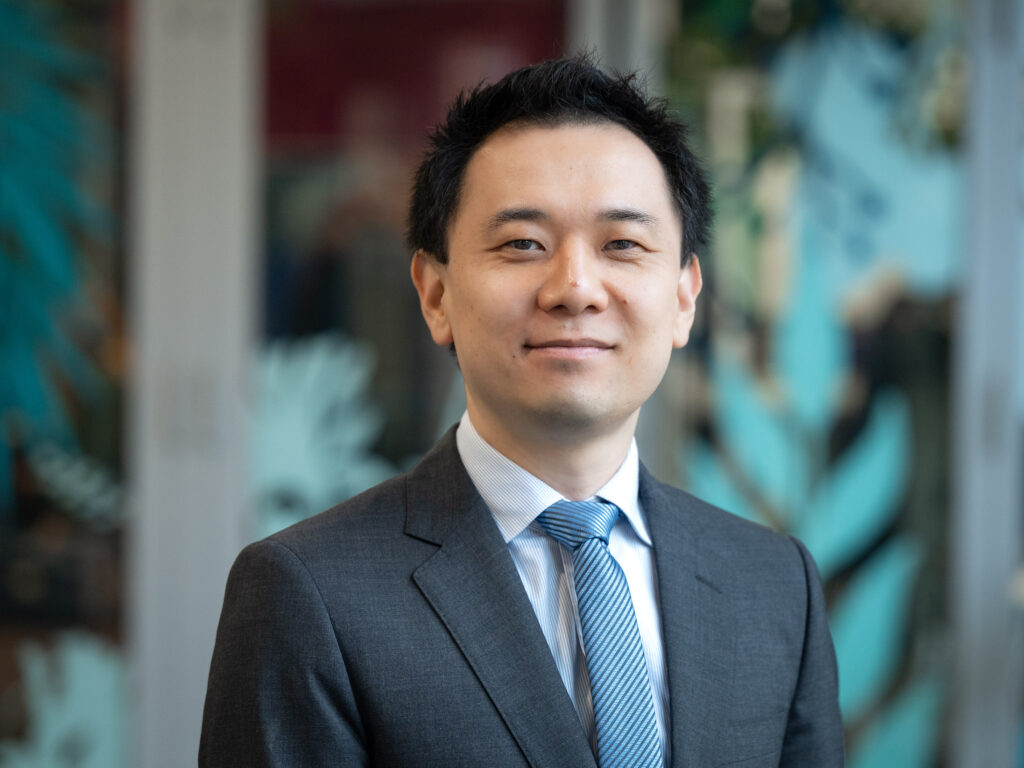
João’s PhD research has made rapid and significant progress, with an exceptional publication record that already places much of his work in the top tier of academic impact. Over the past year, he has published multiple papers in journals ranked at the 95th percentile or above in Scopus, including Nature Reviews Chemistry, Energy & Environmental Science, Energy Research & Social Science, Journal of Cleaner Production and Transportation Research Part D, alongside two articles in the newly launched Nature Reviews Clean Technology.
Together, these papers span a wide range of sectors and approaches, united by a core focus on decarbonising hard‑to‑abate parts of the economy, particularly heavy industry and transport. His most recent Nature Reviews Clean Technology article brings together sociotechnical systems research and the adoption readiness level framework, offering a novel way to evaluate how low‑carbon technologies move from promise to practice. This paper will form the concluding chapter of his PhD thesis.
Alongside publishing, João is currently conducting fieldwork and primary data collection for a new set of papers, with the aim of completing four additional manuscripts by the end of his second PhD year. Despite disruptions to fieldwork caused by geopolitical events, he has continued to make strong progress with the support of his supervisors and colleagues at the Bennett Institute and SPRU, working towards the ambitious goal of being ready for his viva within two years of starting his PhD.